For iPSC-derived cell therapies, many of the most consequential risks are set long before a product reaches the clinic. Cell line selection, differentiation strategy, assay design, and potency definition all influence whether a program can scale, withstand regulatory scrutiny, and demonstrate meaningful clinical effects.
Yet despite growing clinical activity in iPSC-derived therapies, many teams are still navigating these foundations without established industry consensus.
This is where focused, practitioner-led discussion becomes critical.
The Translation Problem in iPSC Development
iPSC platforms offer flexibility, but that same flexibility introduces variability.
Decisions made during discovery and early preclinical development often carry forward in ways that are difficult to reverse. A differentiation protocol that performs well at small scale may not translate to GMP. A potency assay that satisfies early research goals may not provide sufficient resolution for release testing.
Teams are increasingly recognizing that what looks like a scientific optimization problem is often a translational risk issue.
In practice, this shows up as:
Difficulty demonstrating comparability across batches or process changes
Weak correlation between in vitro readouts and in vivo function
Limited clarity on mechanism of action when engaging regulators
Challenges aligning process development with preclinical models
These issues reflect a broader need to integrate preclinical thinking with downstream CMC and regulatory expectations earlier.
Aligning Biology with Manufacturability
One of the defining challenges in iPSC drug development is ensuring that biological ambition does not outpace manufacturing reality.
The choice of starting cell line is a clear example. Clonality, genomic stability, and differentiation competence must be evaluated not just for biological relevance but also for scalability and reproducibility.
Similarly, differentiation strategies need to balance:
- Purity versus yield
- Complexity versus controllability
- Functional maturity versus process robustness
These trade-offs become particularly visible when moving from research-grade protocols into defined, scalable processes. Preclinical teams are increasingly working alongside process development, and CMC leads earlier in the lifecycle. This is a positive shift, but it creates new demands for shared frameworks and benchmarks.

The Evolving Role of Preclinical Evidence
Regulators expect more than proof of concept. For iPSC-derived cell therapies, they are looking for a coherent narrative that connects:
- Cell identity to function
- Mode of action to clinical relevance
- Manufacturing consistency to product performance
Potency assays now must move beyond descriptive markers toward functional relevance. In vivo models must be selected with an understanding of their limitations, particularly when human cell behavior is not well recapitulated.
In many cases, developers are building these frameworks in parallel with process development, rather than sequentially.
Why This Matters Now
The field is entering a phase where early clinical signals are emerging across multiple indications, there is also increased scrutiny.
Investors are asking more detailed questions about manufacturing readiness and scalability. Regulators are expecting clearer justification of comparability and control strategies. Internal teams are under pressure to reduce development timelines without increasing risk. In this context, preclinical decision-making is now a defining factor in program viability.
The 6th iPSC Drug Development Summit provides space for these conversations at the right level of detail.

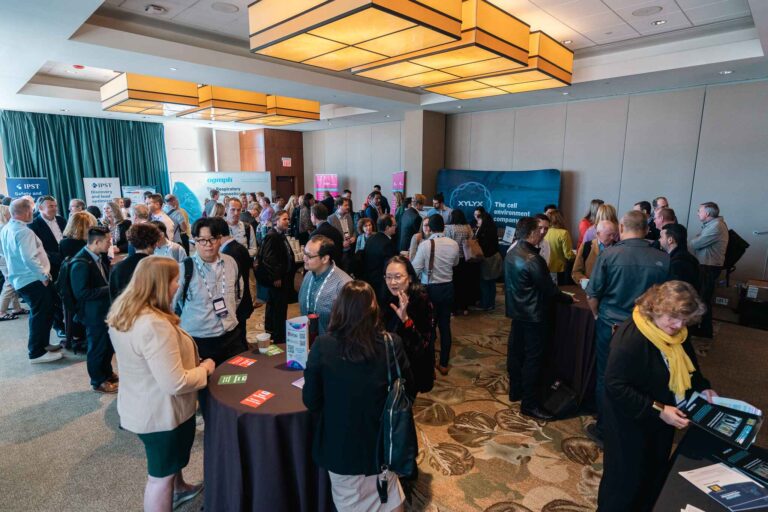
Rather than broad overviews, sessions are grounded in real development experience across:
Cell line development and characterization
Differentiation strategy optimization
Preclinical model selection
Potency assay development
Translational alignment with CMC and regulatory pathways
This matters because many challenges in iPSC development are not solved through published data alone. They are addressed through shared experience, comparison, and iteration. The ability to benchmark decisions against peers facing similar constraints is a key reason teams are returning to focused iPSC meetings.

Explore the 2026 Agenda
See where the bottlenecks really are and how teams are solving them.
This agenda goes beyond theory to highlight the decisions shaping real iPSC programs, from line selection and genome integrity to late stage scale up, comparability, and regulatory confidence.
Partner With Us
Shape the discussion at the point where priorities are being set.
Partnering with the summit gives you a unique opportunity to position your organization at the heart of the iPSC community, build meaningful connections, and become the go-to partner for the iPSC community.

Join the iPSC Community
Connect with a field that has moved past experimentation.
Meet a focused community of leaders working through the realities of clinical translation, manufacturing scale, and regulatory alignment. Biopharma and academics can attend for free!