Over the past year, the iPSC field has entered a new phase of maturity. Progress has not been defined by isolated scientific breakthroughs, rather by multiple parts of the development pathway advancing at the same time, from clinical data through to manufacturing and regulatory clarity. For teams working in iPSC-derived cell therapies, this changes the context in which decisions are being made.
Clinical Progress Is No Longer Theoretical
There is now a meaningful body of clinical activity to point to. As of late 2024, more than 115 pluripotent stem cell clinical trials were underway globally, with over 1,200 patients treated across programs targeting ophthalmology, neurology, and oncology. That scale gives regulators and developers a growing reference point for safety and feasibility. Across these studies, no consistent, class-wide safety signal has emerged, although long-term follow-up is still required. At the individual program level, early signals are becoming more concrete. In Parkinson’s disease, transplantation of iPSC-derived dopaminergic progenitors has shown measurable functional improvements alongside evidence of dopamine production in patients. Despite these early-stage studies, this is a shift from proof-of-concept toward clinical translation with observable outcomes.
Investment is Following Technical Progress
Funding patterns over the last few years have reinforced this momentum. Venture investment into iPSC-focused companies has continued through multiple financing rounds, with substantial capital raised across platform and therapeutic developers. More recent company updates show programs moving into IND-enabling studies, alongside continued capital inflows and the expansion of pipelines into new indications such as autoimmune disease and oncology. This combination of capital and pipeline progression reflects a more selective environment. Investors are asking more detailed questions around manufacturing strategy, scalability, and time to clinic.
Manufacturing Has Become the Central Constraint
If one theme has become clearer over the past year, it is that manufacturing is no longer a downstream consideration; scale-up, automation, and QC strategy are now defining issues for iPSC therapy development.
The same challenges appear consistently:
- Reproducibility across large-scale differentiation
- Standardization of raw materials
- Integration of automation without losing process control
- Alignment between process parameters and product quality
Even where clinical progress is encouraging, these factors determine whether programs can move beyond early trials. Published analyses continue to highlight that reliable GMP-scale-up remains unresolved for many developers, particularly when complex differentiation steps are involved. Manufacturing is now central to shaping development timelines.
Regulatory Expectations Are Becoming More Defined
Regulatory frameworks are also evolving in response to increasing clinical activity. Recent FDA guidance activity has placed greater emphasis on long-term safety data, clearer definitions of manufacturing practices, and structured pathways for advanced therapies. At the same time, broader guidance across cell and gene therapy highlights comparability, manufacturing changes, and clinical trial design as key areas of scrutiny.
Developers are now facing more detailed expectations around:
Potency Definition & Validation
Comparability Across Process Changes
Integration of CMC & Clinical Data
Post-treatment Monitoring
The Field Is Converging Around Similar Problems
One of the more useful observations from the past year is how consistent the problem set has become across organizations. Different companies, working on different indications, are encountering similar issues at similar stages:
- Translating differentiation protocols into reproducible processes
- Defining meaningful potency assays
- Managing comparability during scale-up
- Aligning preclinical data with regulatory expectations
Why This Makes the 6th iPSC Drug Development Summit Timely
Against this backdrop, the relevance of this year’s meeting comes into focus. The summit is aligned to a field that now has:
- Active clinical datasets
- Increasing regulatory engagement
- Defined CMC bottlenecks
- Continued, but more selective, investment
Conversations are becoming more detailed and more grounded in execution. Questions are less about whether iPSC-derived therapies can work, and more about how to develop them in a way that holds up under clinical and regulatory scrutiny.
There is a clear emphasis on how preclinical decisions link to manufacturing outcomes, how CMC strategy influences regulatory progress, and how teams are structuring development in practice. For attendees, the value is in understanding how others are navigating the same constraints. This is particularly relevant for teams approaching key inflection points, whether that is entering IND-enabling studies, scaling manufacturing, or preparing for regulatory interactions.
A More Useful Stage for Peer Exchange
There is a difference between early-stage enthusiasm and informed discussion. The past 12 months have pushed the iPSC field toward the latter. Enough progress has been made to identify where real risks sit, however, enough uncertainty also remains that no single approach has dominated.
This year's meeting is the perfect forum to come together as a community and align on how to overcome these risks to advance clinical pipelines forward.

Explore the 2026 Agenda
See where the bottlenecks really are and how teams are solving them.
This agenda goes beyond theory to highlight the decisions shaping real iPSC programs, from line selection and genome integrity to late stage scale up, comparability, and regulatory confidence.
Partner With Us
Shape the discussion at the point where priorities are being set.
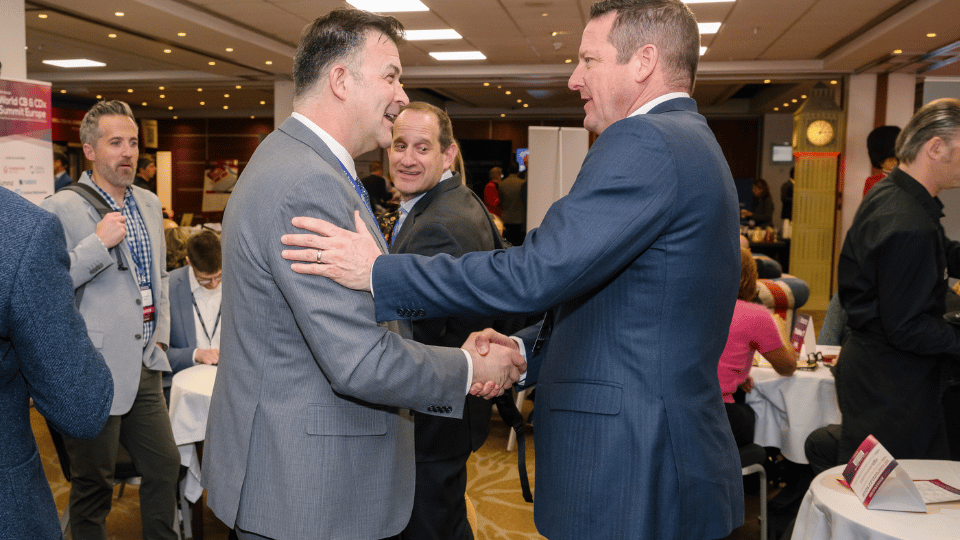
Partnering with the summit gives you a unique opportunity to position your organization at the heart of the iPSC community, build meaningful connections, and become the go-to partner for the iPSC community.

Join the iPSC Community
Connect with a field that has moved past experimentation.
Meet a focused community of leaders working through the realities of clinical translation, manufacturing scale, and regulatory alignment. Biopharma and academics can attend for free!